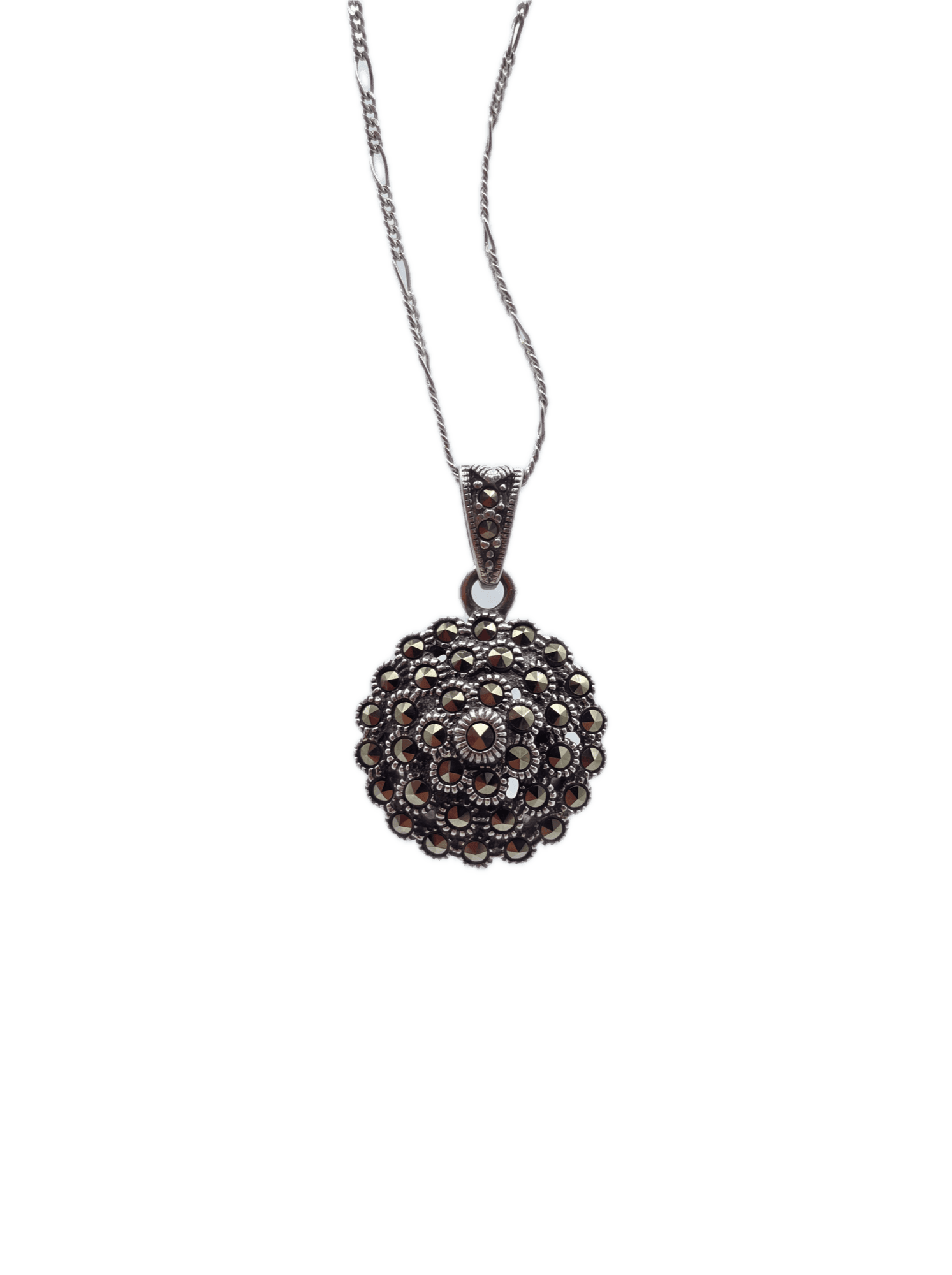
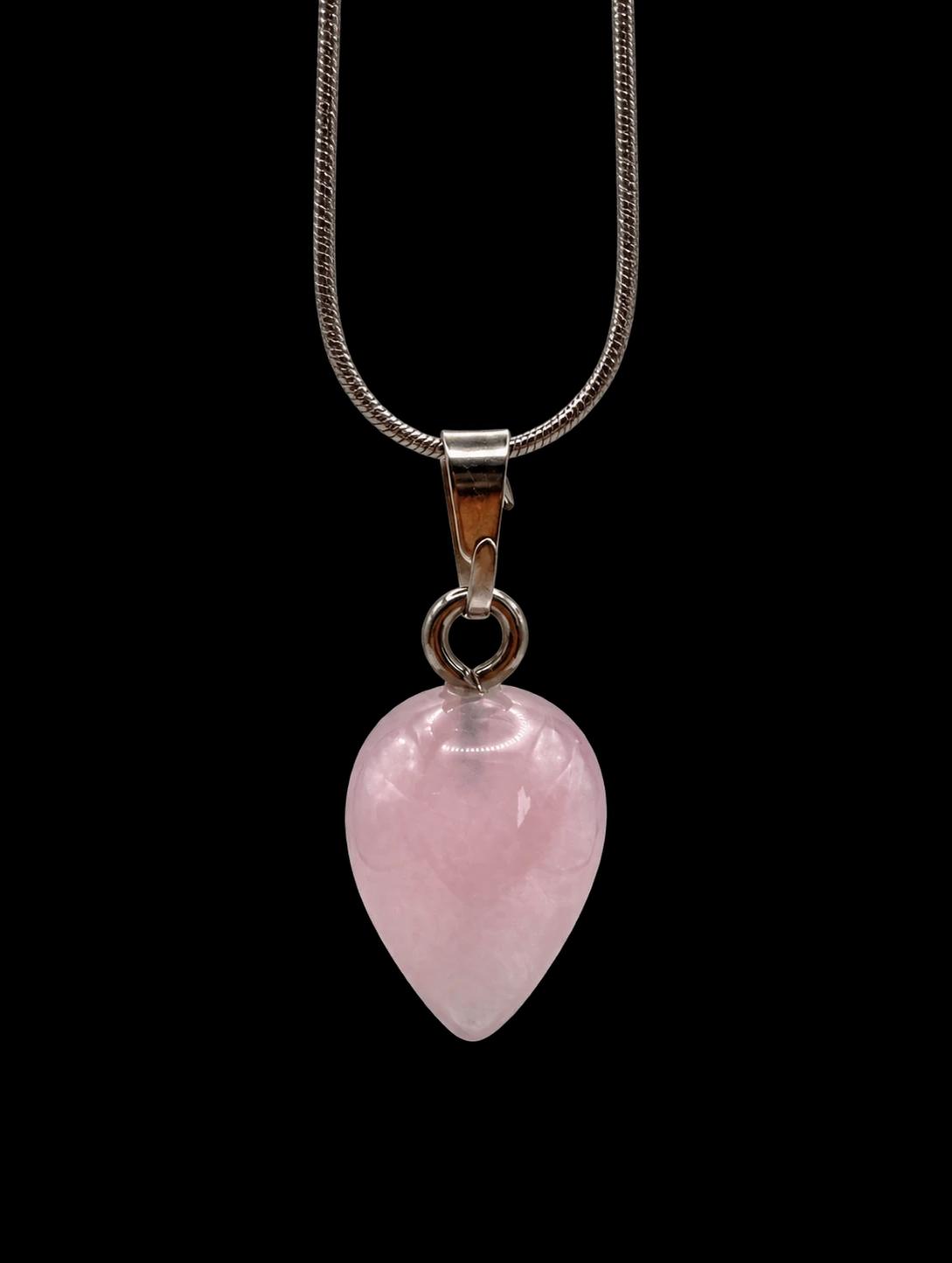

Rosewater Drop Pink Agate Necklace
Steel · Agate
CDN $85
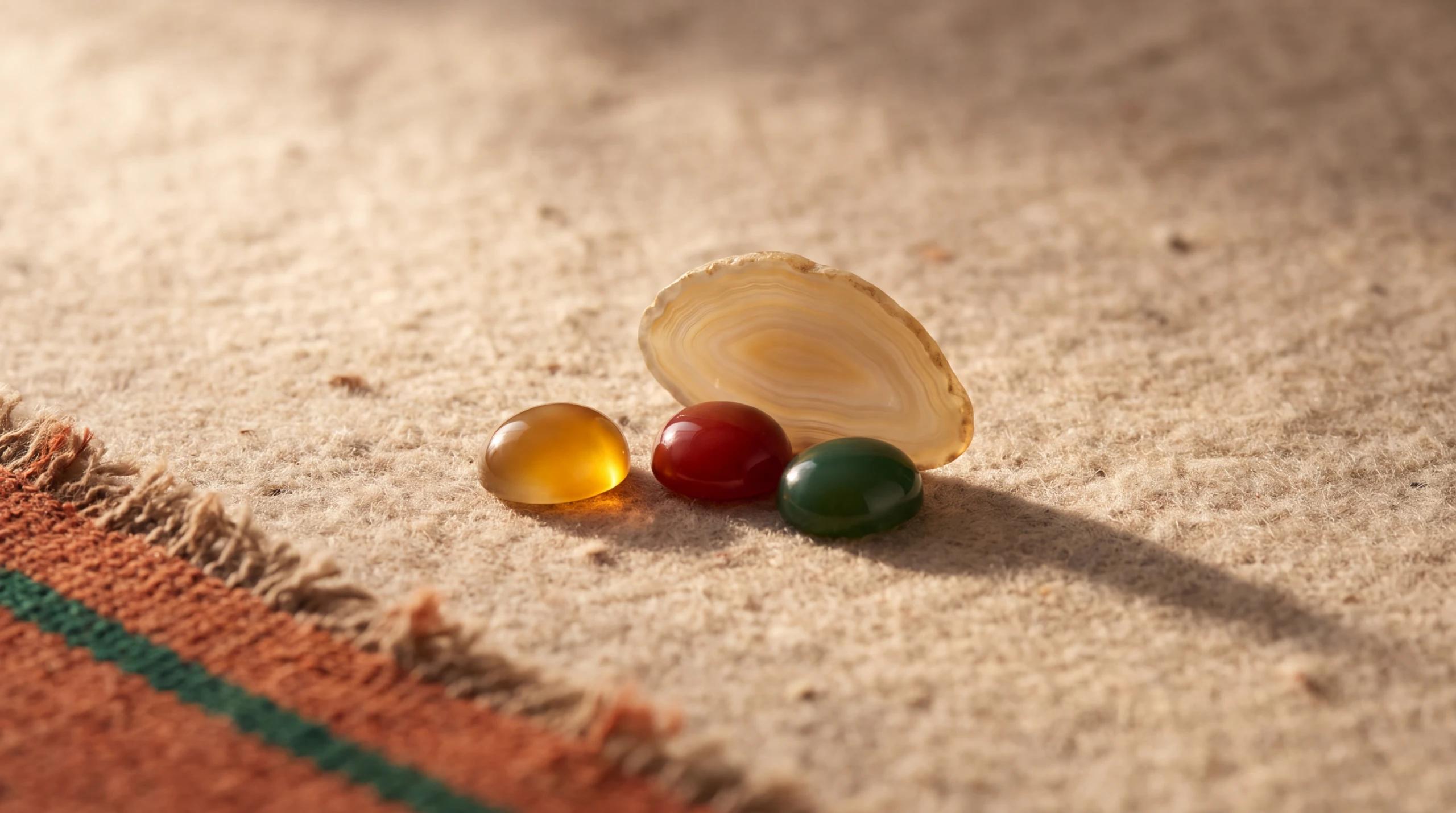
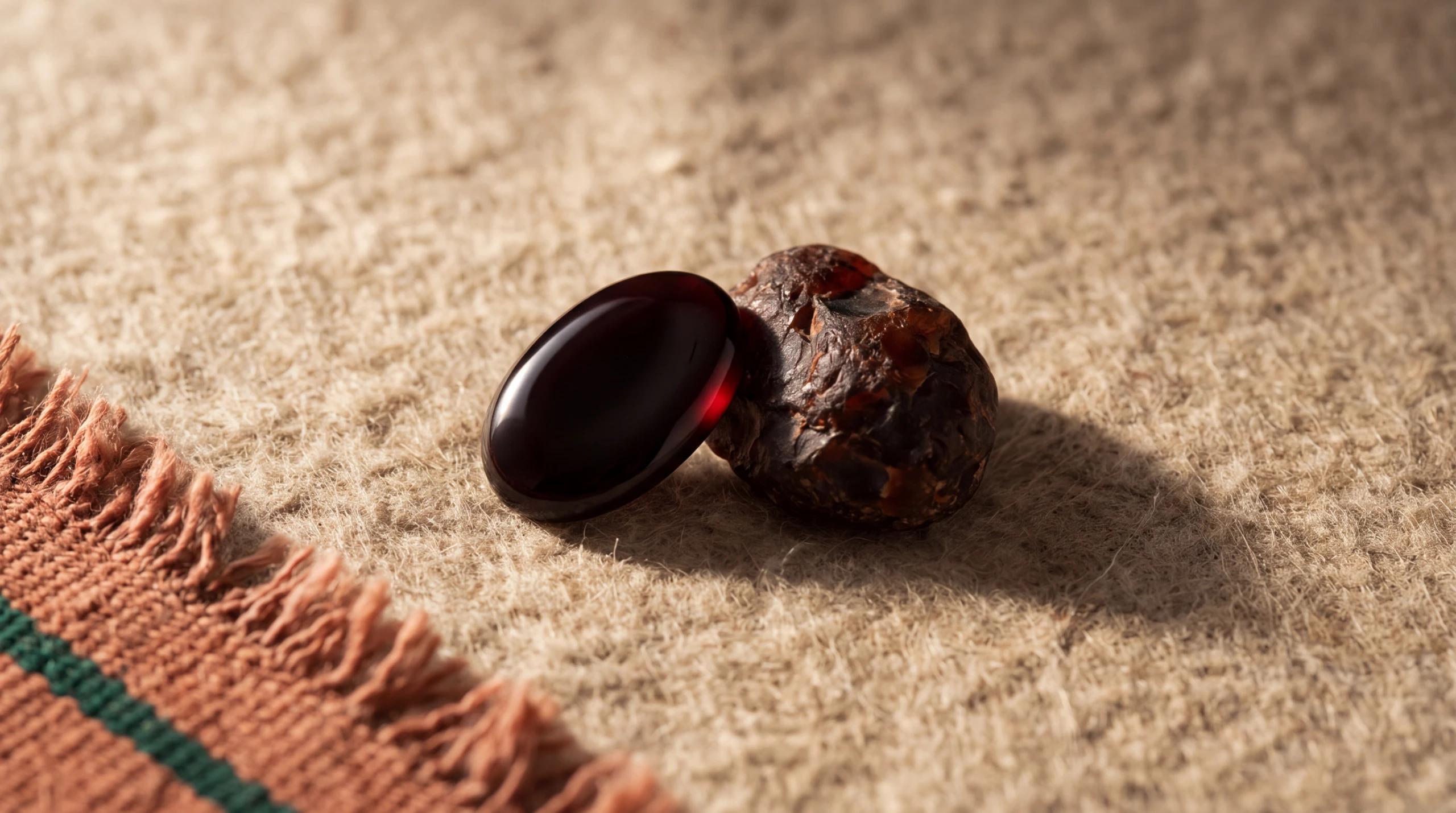
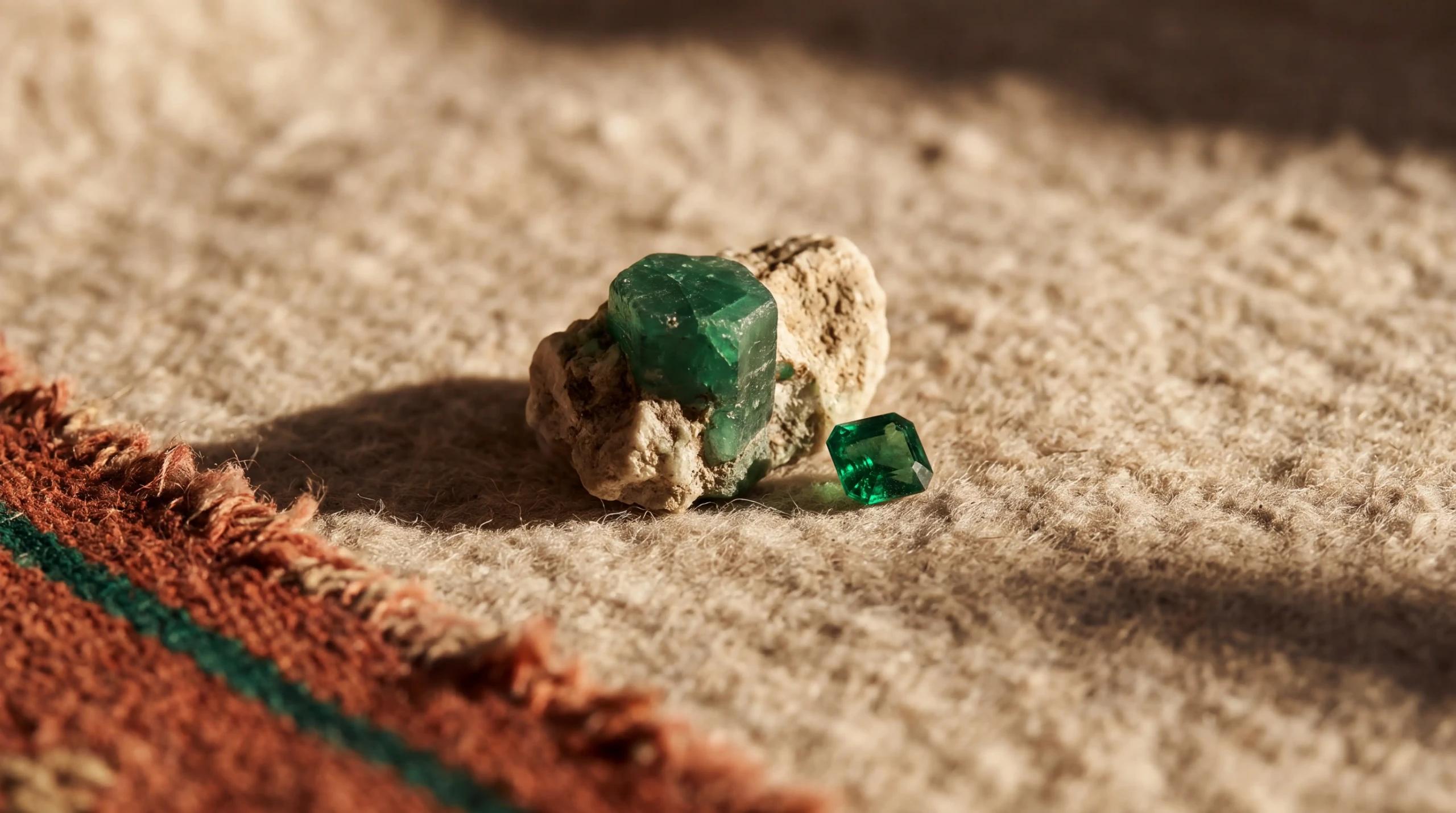
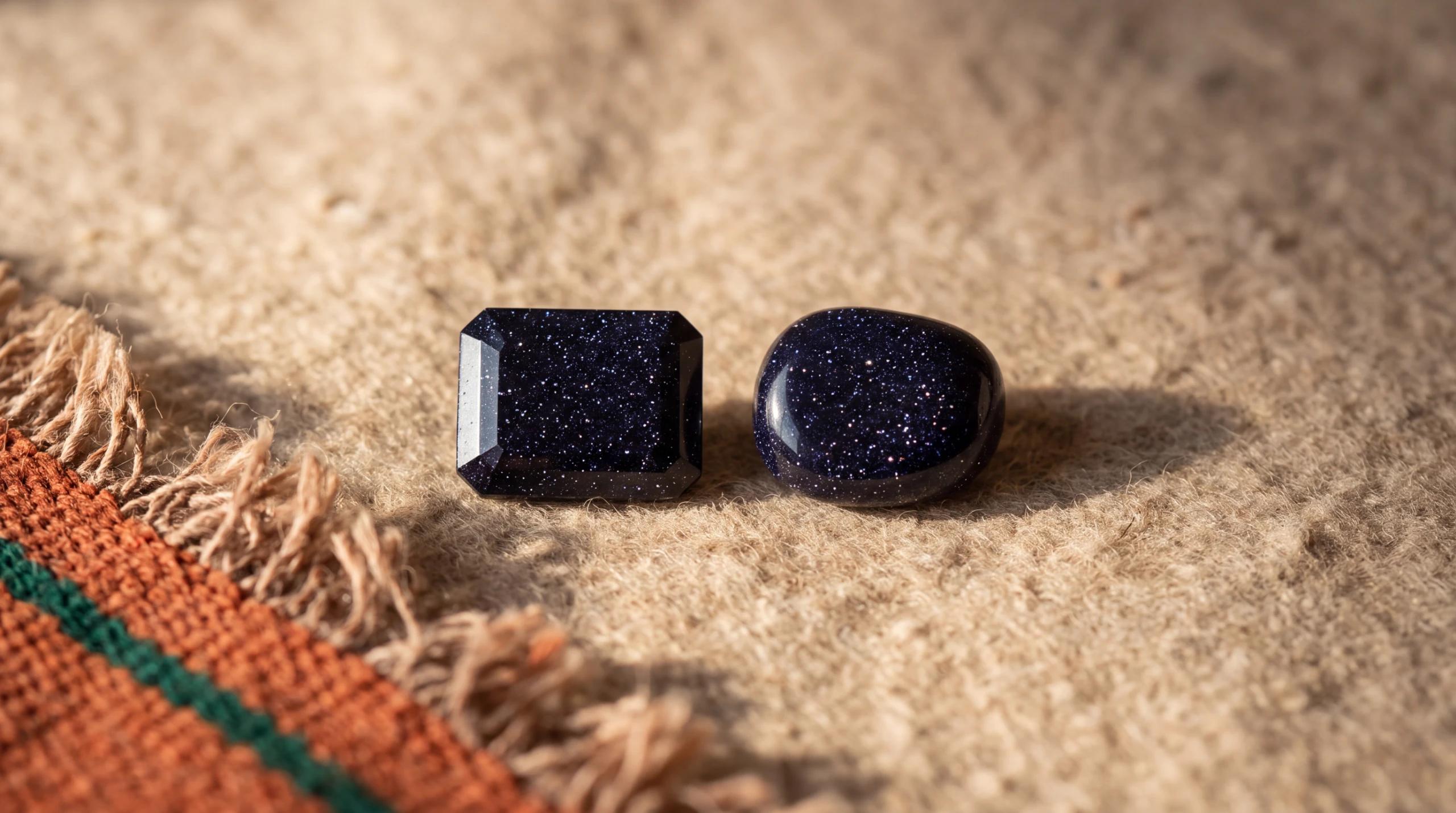
Agate, aqiq in Persian, is stone grown in layers over millions of years, each band a slow record of time, in nearly every colour of the earth.
Includes carnelian.
14 pieces
Steel · Agate
CDN $85
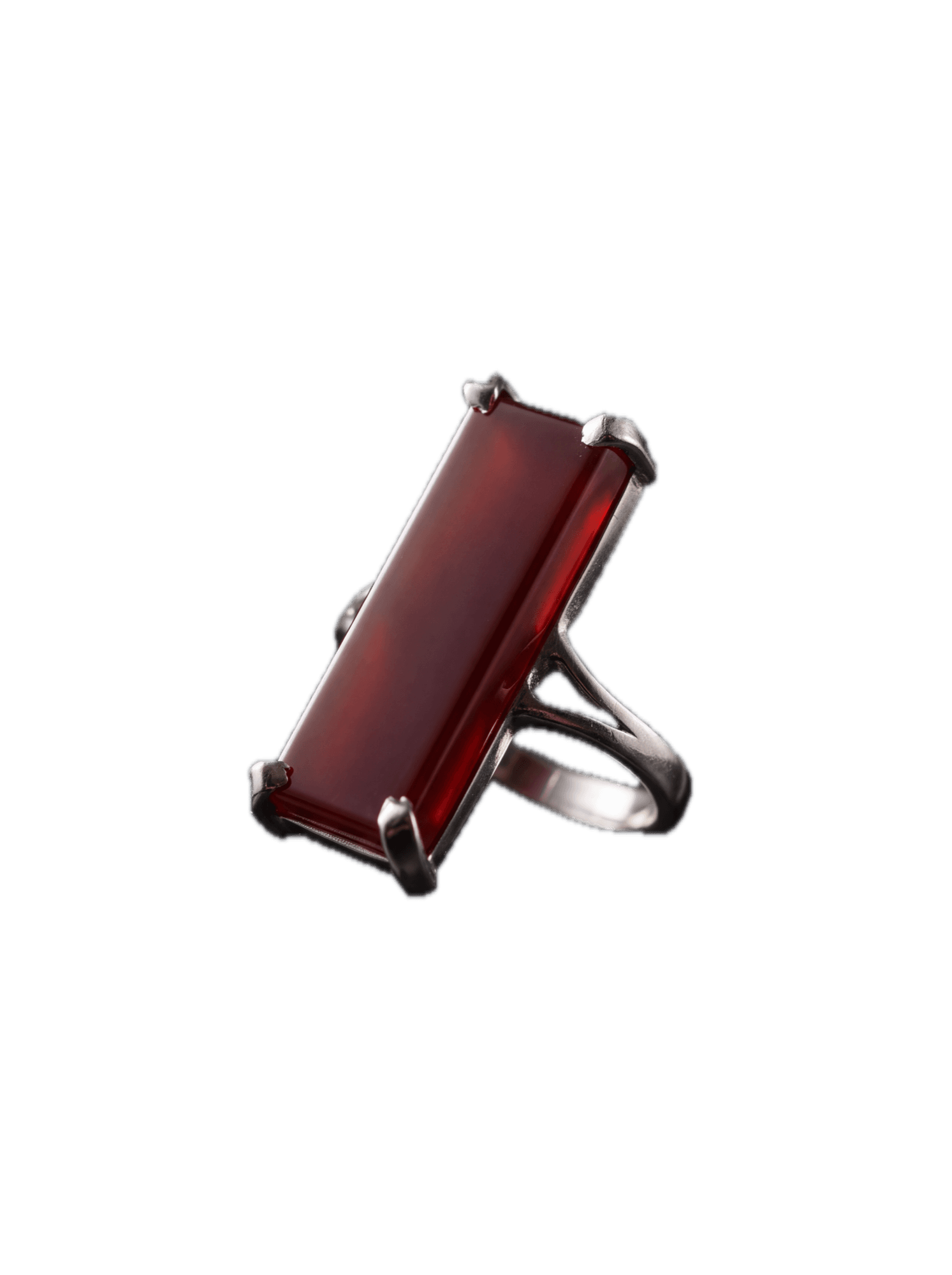
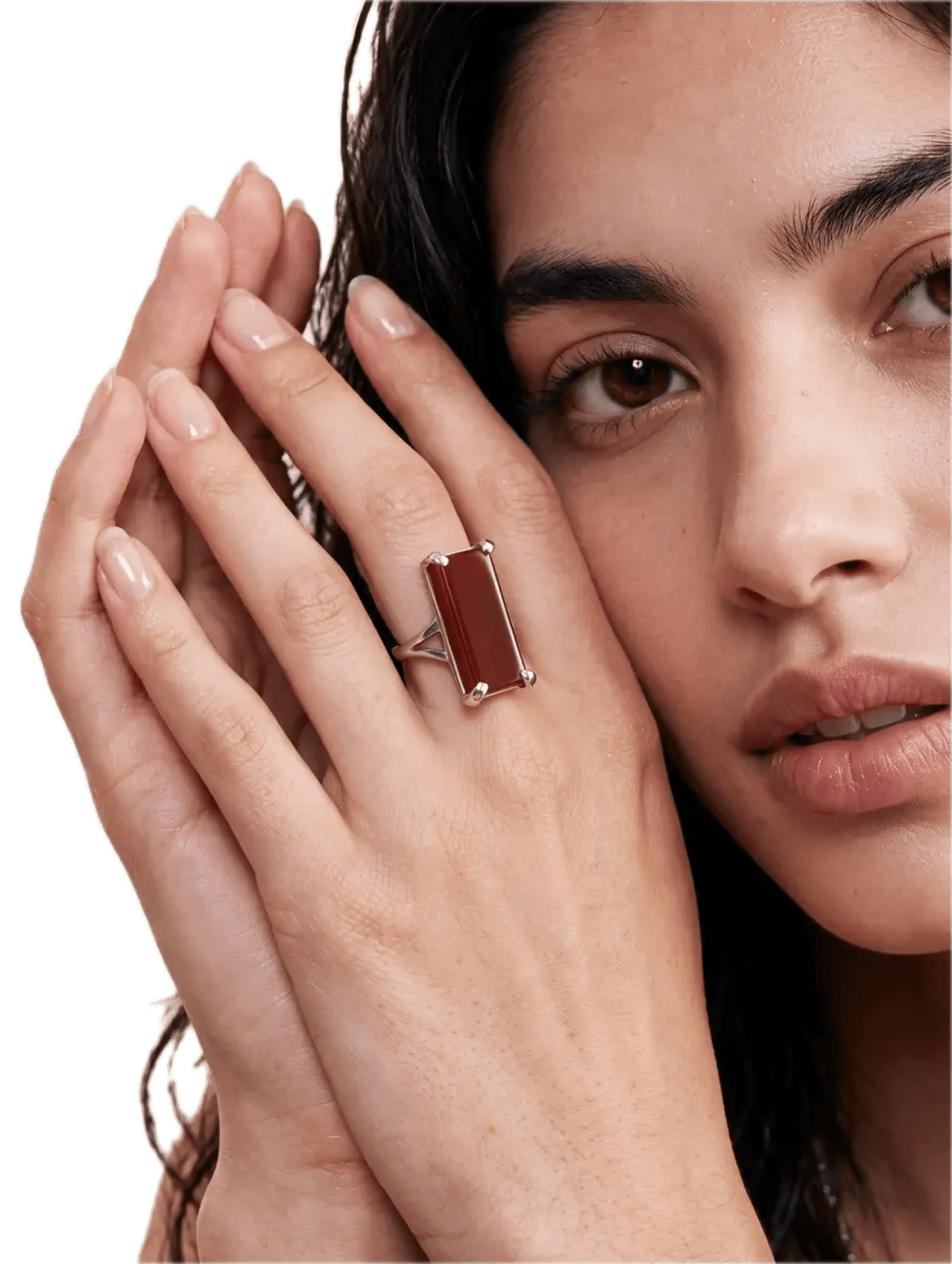
Fine Silver · Carnelian
CDN $195
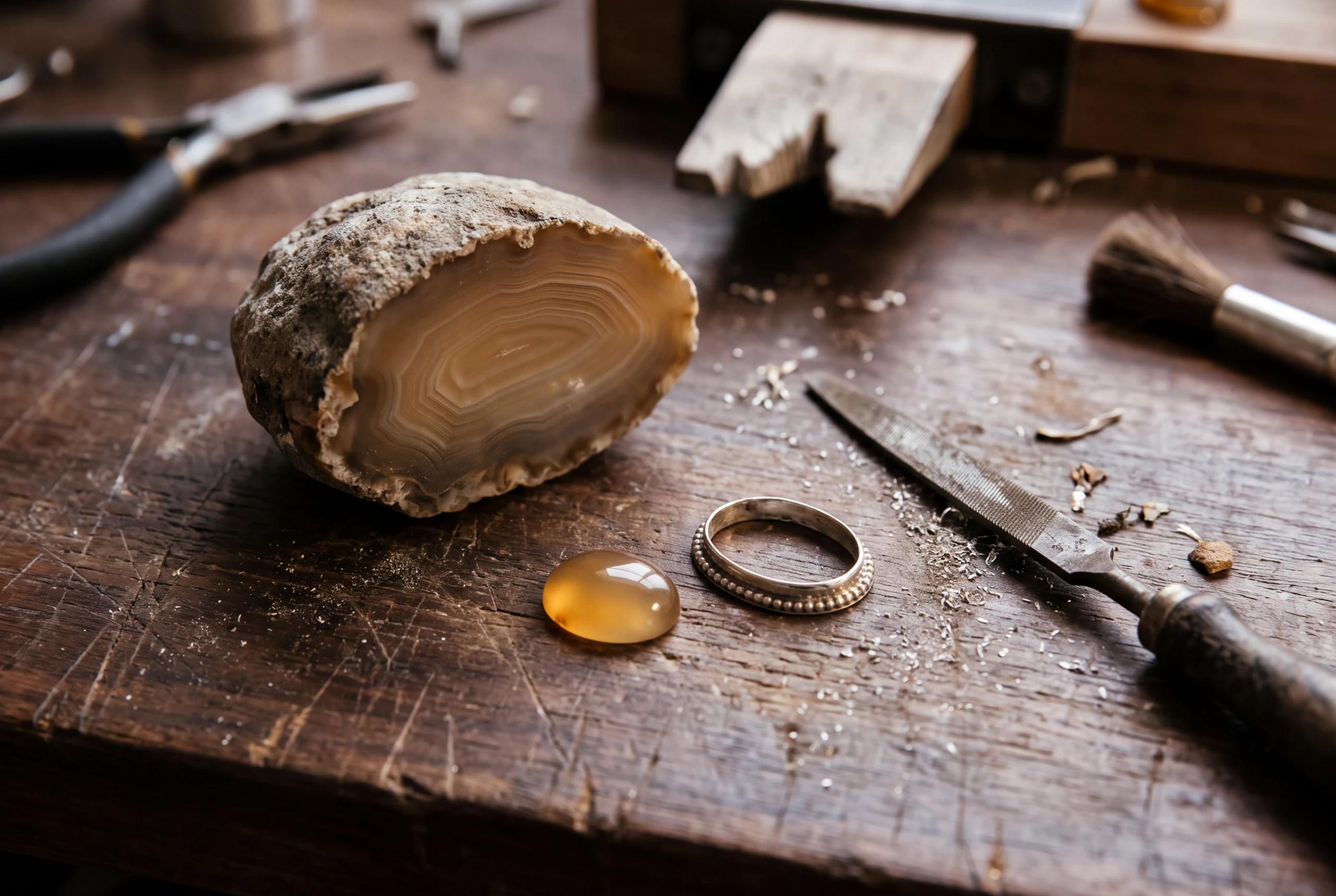
Agate begins as silica-rich water seeping into hollows in ancient volcanic rock. Over millions of years it settles there layer by layer, each layer a slightly different colour, until the hollow is filled with fine bands. From the outside it is a plain, rough stone; only when it is cut do the bands appear, which is why no two pieces are ever the same.
The minerals in that water decide its colour, so agate comes in almost every shade the earth makes: honey and gold, every red from orange to deep blood, soft greens, sky blues, smoky greys, milky whites and black. Some pieces hold fine branching patterns like tiny trees or moss; others carry a rainbow sheen beneath the surface.
In Persian the whole family is aqiq, and Iranians name it by colour and pattern, from aqiq-e zard, the golden, and aqiq-e sorkh, the red, to aqiq-e kahuyi, lettuce-green, and aqiq-e shajar, the tree agate. Few stones are more woven into everyday life in Iran, where agate has been carved, set and handed down for generations. At Ashayer, every agate is set by hand by silversmiths in Iran, chosen for its colour and the way light moves through it.